
Twisted Logic
Bill Would Increase Up-Front Rental Costs To 'Help' Tenants

Also on today’s menu at the News Café:
Executive Council Tables Million-Dollar Contract Increase
Homan Promises Mass Deportations, Not ‘Softer Touch’
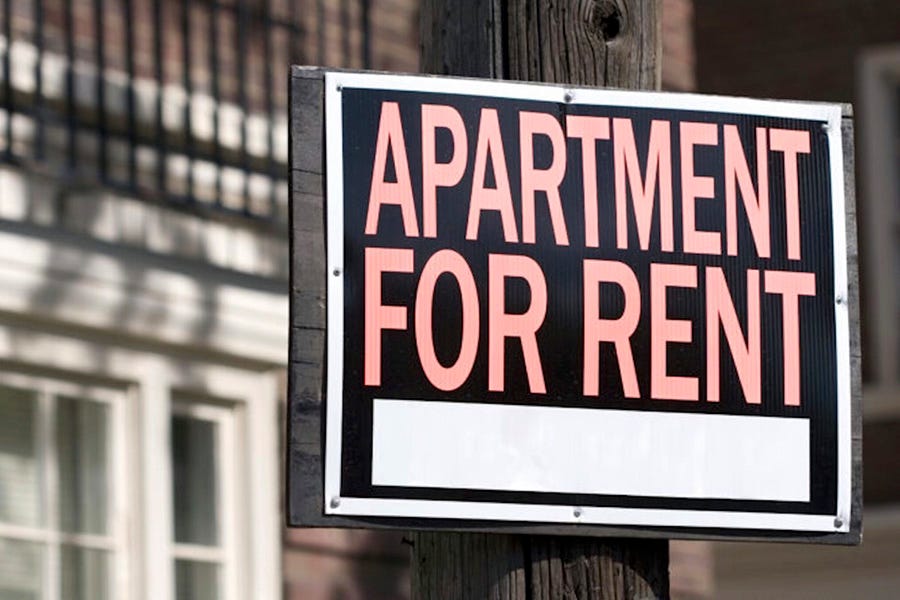
The NH Senate is poised to act on a bill providing “an alternative approval pathway” for low-income people seeking rental housing. The Senate Commerce Committee is recommending passage of House Bill 1336, which would allow landlords to offer “regulated conditional deposits” in addition to the standard first- and last-month rent plus security deposit required of new renters, as a way of allowing those with low credit scores or income levels to secure housing.
An Urban Institute analysis found that 23 percent of New Hampshire households have less than $2,000 in savings, yet with the current average rent in New Hampshire being $2,015 per month, renters may be required to provide $4,030 up front for first- and last-month payments, plus another $2,015 as a security deposit. If enacted, the legislation would allow landlords to ask for an additional $2,015 on top of that $6,045 cost to accept applications from those with credit scores of 650 or lower, or whose combined verifiable household gross income falls within 350 percent of the federal poverty guidelines and “does not exceed 3 times the monthly rent”.
Landlords would be able to accept payment of a regulated conditional deposit in installments to ease the blow, and the bill allows third parties to pay on behalf of the tenant, and potentially receive a refund in the future.
Discussion: The bill clearly helps landlords, but its benefits to renters is speculative. It is unlikely that a low-income family would have even New Hampshire’s average savings of $2,000, let alone the $8,060 in up-front rental costs that could be required. Nick Taylor, director of New Hampshire Housing Action, said the plan could lead people into a worse financial situation in order to obtain housing. It also could end up as a taxpayer burden, with town welfare offices legally obligated to provide rental assistance.
Executive Council Tables Million-Dollar Contract Increase
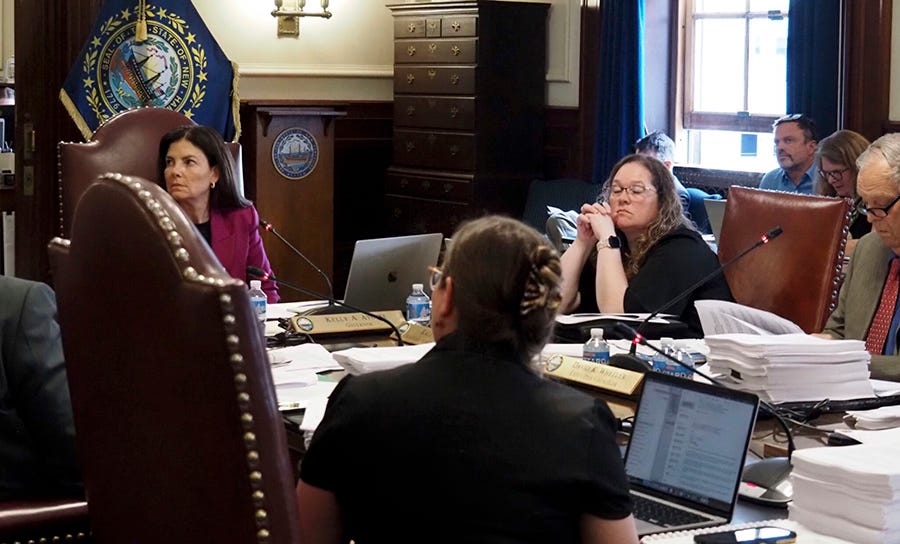
The New Hampshire Executive Council tabled a $1,276,128 amendment to the state’s contract with Pyramid Model Consortium that would increase the total contract cost to more than $3.6 million by the end of fiscal year 2028. The contract, currently paid with federal money, supports the Granite Steps for Quality program that promotes social-emotional development and school readiness in children under age 5.
Executive Councilor David Wheeler raised concerns that one of Pyramid Model Consortium’s strategic priorities is to advance diversity, equity, and inclusion. “Without seeing the curriculum, I can’t support this item,” he said, adding that he would not approve the contract if there were “politically correct teachings”.
Health and Human Services’ associate commissioner Chris Santaniello said, “I am suspecting that’s what it’s talking about [is] equal access to childcare for all children,” noting that the “inclusion language” is necessary because the program works with “lots of children” including those with disabilities.
Discussion: The additional funding would go toward expanding free, statewide professional development services for childcare providers, teaching professionals care strategies for young children with special needs, providing technical support for the program, and promoting collaboration and contract oversight between Health and Human Services and the Pyramid Model Consortium.
Homan Promises Mass Deportations, Not ‘Softer Touch’

When President Donald Trump replaced Kristi Noem with former Oklahoma senator Markwayne Mullin as secretary of the Department of Homeland Security, he promised “a little bit of a softer touch” on immigration after federal agents had killed two US citizens; but when Tom Homan, executive assistant director for Enforcement and Removal Operations, spoke at the Border Security Expo in Phoenix AZ this week, he praised the work of Border Patrol agents and Immigration and Customs Enforcement officers who arrested more than half a million undocumented immigrants last year. “If you think last year’s historic number is good, wait till next year and we have 10,000 more agents on the border. You ain’t seen s*** yet,” Homan said. “Mass deportations are coming.”
Homan went on to say that, while arrests and deportations would focus on those with criminal backgrounds or who posed a security threat, “it doesn’t mean because you prioritize criminals, everybody else is off the table. I’ve said no one’s off the table. Why is that? I don’t care how long you’ve been here. If you’re here illegally into this country, you cheated.”
Acting US Attorney-General Todd Blanche said denaturalizations and immigration courts are a priority for the Department of Justice. “It doesn’t matter your badge. We had every federal agency focused on the mission of illegal immigration,” Blanche said. “We do not view this as mission accomplished.… We continue to view illegal immigration and border security as a top priority for the department.”
Discussion: Being in the United States illegally is a misdemeanor, while human trafficking, murder, rape, and financial crimes are far more serious. Yet the Justice Department has dropped many of those serious cases to focus on people who have lived in this country for years, working hard at jobs that support the economy, their families, and their neighbors. The percentage of immigrant detainees who have committed serious crimes remains small, with the majority of those being seized having lived as law-abiding residents.