
Seeking Anonymity
Lawsuit Would End Requirement To Disclose Name And Address

Also on today’s menu at the News Café:
Government Settles, Preserves First Amendment Rights
Study Affirms Link Between Vaccines And Myocarditis
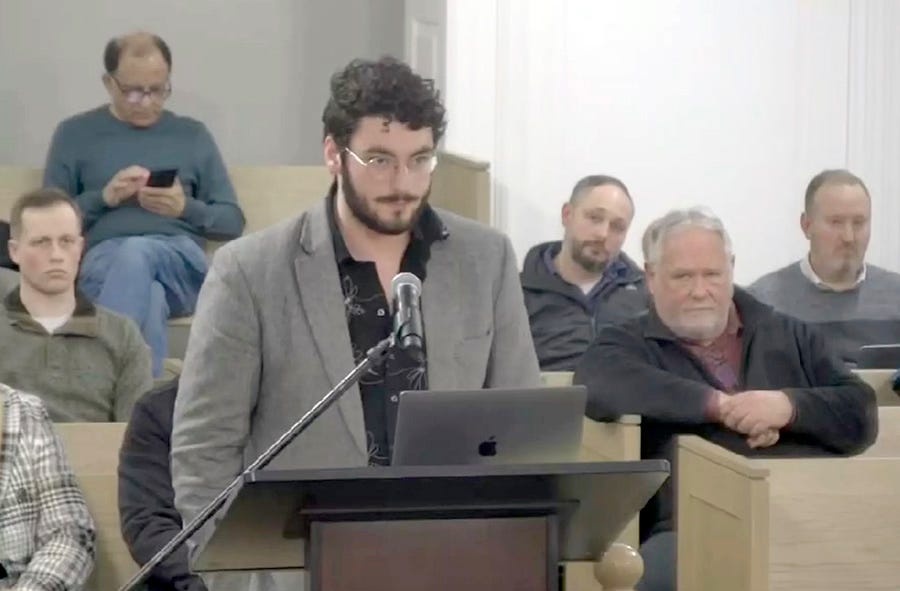
Simon Amaya Price of Massachusetts, who shares his experiences transitioning from male to female and then deciding to detransition, has filed a lawsuit against the Nashua Board of Aldermen’s requirement that those speaking at their meetings must state their names and addresses. Price, who intended to express concerns about the city flying a pride flag, refused to provide his name and address, saying, “I have been advised by my security team to keep that private.” Price has received death threats for his anti-transgender advocacy work and, because Nashua posts videos of its public meetings on YouTube and publishes meeting minutes that include speakers’ addresses, the requirement would mean he would “publicly dox himself” by presenting his opinions, according to his lawsuit.
Lawyers for the Institute for Free Speech, a Washington-based advocacy group, said, “Nashua’s address rule unreasonably deters speakers who want to discuss controversial topics or take unpopular positions — preventing the board from hearing a particular set of viewpoints and input prior to making decisions on resolutions and other matters.”
The New Hampshire Municipal Association recommends that towns and cities require people to identify themselves during the public comment portions of meetings, in part to satisfy the state’s Right-To-Know law that requires wide public disclosure of governmental discussions. Greg Sullivan, an attorney for the New England First Amendment Coalition who is not involved in the lawsuit, said, however, that he questions the need for such disclosure. “To me, there’s no reason that an individual who wants to exercise their free speech rights has to even give a name, never mind an address,” he said, noting that anonymous speech in pamphlets or in person has been “critical to building this country from Day 1.”
Discussion: The First Amendment’s right to free speech is clear, but executing the right remains subject to interpretation. Does that freedom include the right to shield one’s identity from the citizenry during public debate? I tend to believe that, when speaking in public, whether in letters to the editor or on the floor of a meeting, one should identify oneself. When there is a clear case of personal danger, the person can ask for a discussion in private, and pamphleteering is another way to express views while remaining anonymous. As for advocating for the removal of a flag that one finds offensive, that is another matter that has more to do with the individual community’s values.
Government Settles, Preserves First Amendment Rights
Among the 67 pages of complaints about content in one batch of what became known as the Twitter Files, investigative reporters found a form letter informing a Georgia official that his complaint about a Fox News story had been forwarded to “our partners” that included “The Cyber and Infrastructure Security Agency at the Department of Homeland Security” and “The Election Integrity Partnership” at Stanford University.
“This was the first time an outsider had seen the plumbing of a wide-scale effort by federal agencies like the Cybersecurity and Infrastructure Security Agency (CISA) to regulate mis-, dis-, and malinformation in the social media landscape,” writes Matt Taibbi, one of those investigative reporters. “It took considerable effort to untangle the mechanism by which complaints of ‘misinformation’ were processed — the process was deliberately confusing — but the documents in the Twitter Files ended up playing a role in helping a landmark First Amendment case already launched in the courts, called Missouri v. Biden.”
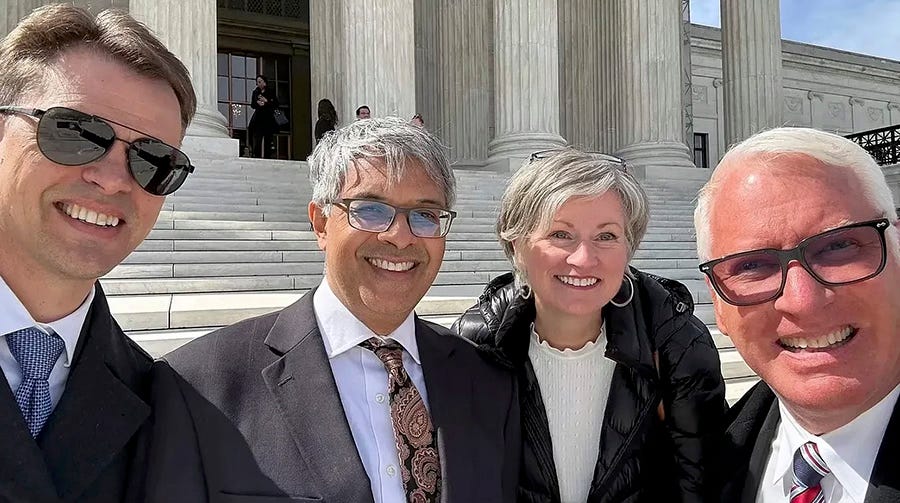
The case involves “a vast censorship operation emanating from the highest levels of government” in which “federal agencies and the White House directed social media companies to censor viewpoints that conflicted with the government’s preferred policies and messaging on topics ranging from covid policy and election integrity to gender ideology and foreign policy,” writes Dr. Aaron Kheriaty, one of the plaintiffs. “These egregious First Amendment violations silenced not only the plaintiffs in our case but tens of thousands of other Americans.”
In a settlement announced on March 24, the federal government agreed that government officials, politicians, media, academics, or anyone else labeling speech “misinformation”, “disinformation”, and “malinformation” cannot overrule constitutionally protected speech. No longer can the government threaten social media companies into removing or suppressing speech on Facebook, Instagram, X, LinkedIn, or YouTube, and the government cannot direct or veto the companies’ social media content moderation choices.
Discussion: The plaintiffs, Dr. Aaron Kheriaty, Jill Hines, and Jim Hoft, joined by the states of Missouri and Louisiana, alleged that the federal government “unlawfully pressured, coerced, induced, and encouraged major social media platforms to censor their posts about Covid-19, the Hunter Biden laptop report, and the 2020 Presidential election.” While some of the posts were inaccurate or downright lies, they do constitute protected speech under the First Amendment. The censorship of such posts, some of which were accurate but countered the government’s narrative (see below), was a factor in the nation’s rejection of Democrats and the election of Donald Trump in 2024. The settlement comes at a time when the Trump administration has been attempting to suppress free speech, so, as Taibbi writes, “After the many controversies of the last few years, Democrats can probably be counted on to support the First Amendment for as long as Trump is in office, and you know what? That’s okay! That’s good. As long as both parties see the political benefit in appearing to be on the side of one of America’s core beliefs, it’s a win.” Oh, and if people object to the content they see on social media, they have the option of closing those social media accounts.
Study Affirms Link Between Vaccines And Myocarditis
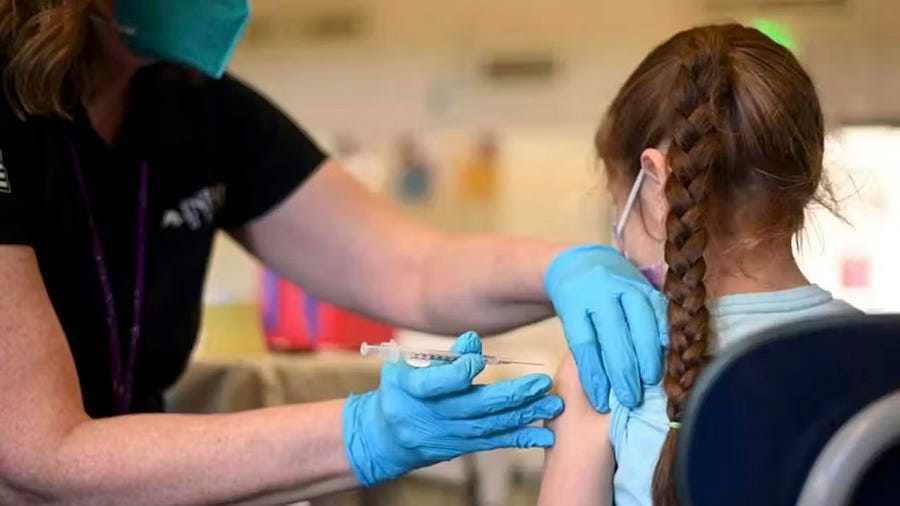
The National Library of Medicine published a peer-reviewed study assessing the safety and effectiveness of the first- and second-dose BNT162b2 COVID-19 vaccination on children and adolescents in England during the national COVID-19 vaccine roll-out in September 2021. “Across all analyses, there were no COVID-19-related deaths, and fewer than seven COVID-19-related critical care admissions,” the study found. However, “Myocarditis and pericarditis were documented only in the vaccinated groups, with rates of 27 and 10 cases/million after the first and second doses, respectively.”
In other words, the vaccine definitely saved lives, but in some cases, it also had side effects such as inflammation of the heart muscle, which the government did not want to acknowledge and, in fact, labeled as misinformation. Normally, drug companies are required to list the possible side effects of their products, but that requirement was waived for COVID-19 (as was full testing before being approved for use).
The study, conducted by researchers at the University of Oxford, the University of Bristol, and the Harvard T.H. Chan School of Public Health, and published in the scientific journal Epidemiology in January, also found that the protection the vaccines offered against COVID-19 was transient, but that already had been acknowledged in the requirements for booster shots.
Discussion: A coalition of medical organizations is trying to force the government to continue recommending the COVID shots for children and pregnant women, even in the face of the documented health complications that can occur. That is fine, as long as parents are aware of the risks and can weigh those risks against the benefits of the shots.