
'No Problems Here'
State Prepares Defense Of Eliminating Emissions Testing

Also on today’s menu at the News Café:
Study Examines Best Approach To School Administration
The People Have Chosen The Kind Of Country They Want
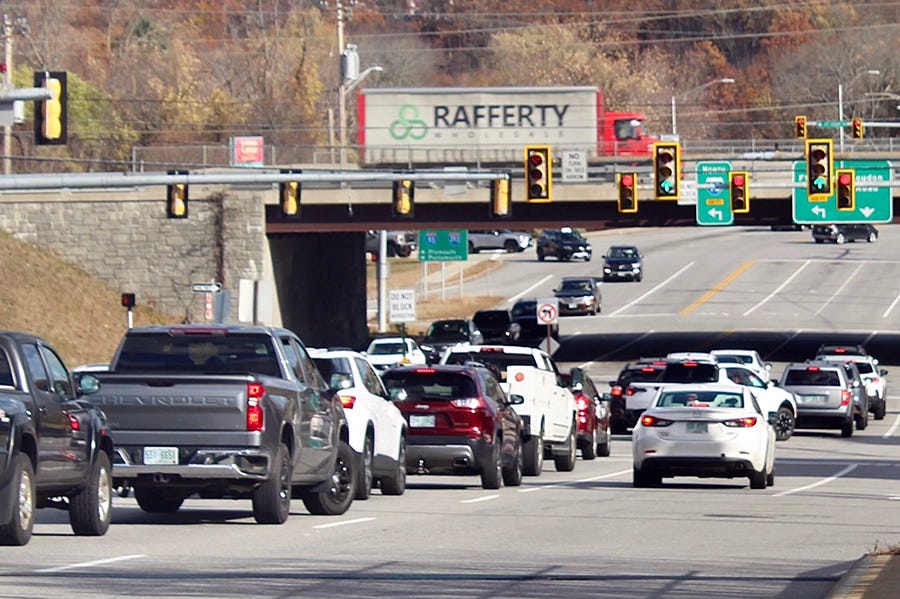
The New Hampshire Legislature, in its biennial budget, ended the requirements for vehicle inspections and emissions testing in 2026, despite the prospect of federal penalties if the state stops testing emissions without the approval of the US Environmental Protection Agency. Now the state is preparing to ask the EPA to amend the state’s air quality protection plan — the first state to fully withdraw from the Ozone Transport Commission, formed in 1990 by New Hampshire, 11 other Northeast and Mid-Atlantic states, and the District of Columbia.
While NH Department of Environmental Services Commissioner Robert Scott had warned of the consequences of abandoning emissions testing, his department now argues in draft versions of the EPA applications that the change will not harm air quality. Its draft version of the amended implementation plan cites air quality monitoring data showing that New Hampshire has had lower-than-required levels of several emissions-related pollutants in recent years. “Current emission levels in New Hampshire are well below the levels that NH was experiencing when the state first came into attainment with National Ambient Air Quality Standards,” because modern vehicles are more fuel-efficient, according to Jim Martin.
Jack Dibb, an associate professor in Earth Sciences at the University of New Hampshire, warns that ending emissions testing would lead to more cars’ emissions control systems failing without drivers being aware and making repairs. “[O]ver time, air quality could seriously degrade,” he said.
Discussion: When people raised objections to the elimination of motor vehicle inspections, proponents of the change argued that data have not shown a connection between inspections and accidents, but that was a “red herring”. Inspections are not intended to prevent accidents; they are intended to make sure that vehicles are safe, and that issues are identified early, before serious problems result that, in the end, will be much more expensive to address. It is the same with emissions testing. The use of air quality trends to argue that the testing is unnecessary ignores the danger of not addressing problems right away.
Study Examines Best Approach To School Administration
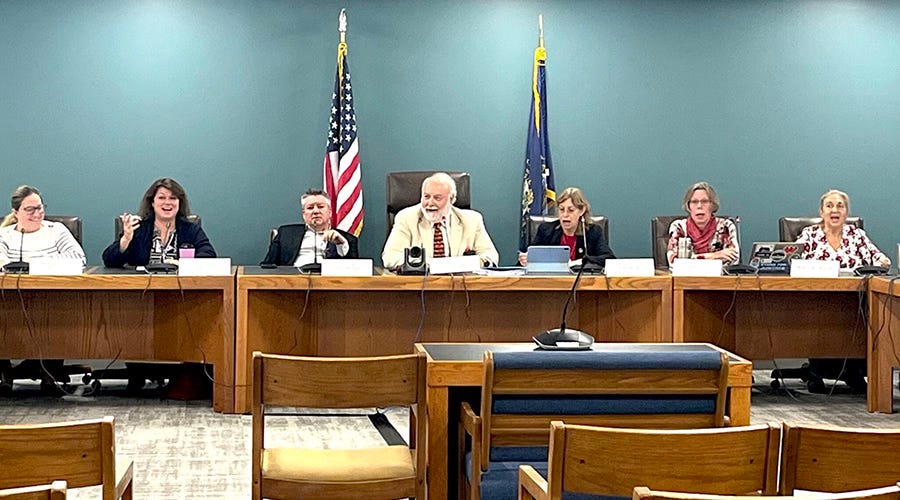
“NH has some of the highest costs for education administration (and education in general) in the country,” according to the Final Report of the Committee to Study Reducing the Number of School Administrative Units (SAUs) in the State, established under Senate Bill 57. The panel, led by Representative Dan McGuire (R-Epsom), recommends concentrating administrative functions in an elected county school administrator, with separate administrators for Manchester and Nashua. “This should realize most of the possible economies of scale, while maintaining the voter’s control over the education apparatus,” the report states. “Our proposal would further enhance local control by leaving only business functions at the county level, and moving academic functions back to the school district level.”
The report also notes, “One of the most difficult parts of education today is special education, which consumes about a quarter of the education dollar. There might be an advantage to moving the creation and administration of IEPs to the consolidated county level. This specialization would particularly benefit smaller districts and spread their financial risk over a larger population. It would, however, significantly change the size of county budgets. There is now a study commission looking into special education, and their conclusions should be used to further refine our proposal.”
Mark MacLean and Jerry Frew of the NH School Administrators Association provided an overview of the role of the superintendent: general leadership, curriculum and instruction, personnel management, finance, student services and student/staff safety, communications and community relations, and maintenance and capital improvement. “They described how the role has only grown in complexity over the years with added layers of reporting responsibilities, covid-era demands, and social pressures, among other factors. NHSAA questioned whether a single county-level superintendent could possibly respond to all these demands on behalf of the dozens of communities they would represent.”
The committee’s minority report said, “It is not clearly evident that consolidation, particularly to the scale suggested in the majority report, will actually save money. In Maine and Vermont administrative cost savings were redirected to increased transportation costs with longer transit times for students. Aligning salaries throughout new larger SAUs to meet the contractual requirements of the highest compensated employees prevented cost savings indefinitely. There is likely to be increased administrative costs in schools as superintendent responsibilities are downshifted to principals and more building level administration is needed.”
Representative Hope Damon (D-Croydon) said of the report, “More than one thing can be true at the same time. Being sympathetic to taxpayers and concerned — greatly concerned — about the cost of education does not cancel out the need to look at consolidation very, very deliberately, so that whatever plan is proposed, if any, does not diminish the quality of public education, and I do not think that this committee has thoroughly done due diligence to achieve that end.”
Barrett Christina, executive director of the New Hampshire School Boards Association, said most school board members appreciate having more localized superintendents, and that taking those away could erode local control.
Discussion: The study was a much-needed review of the options for making New Hampshire’s educational system more efficient. Superintendents originally served several school districts, but many are now in single-district SAUs, which raises the question of why. It allows superintendents to concentrate more fully on a district’s needs, and, indeed, the duties have expanded over the years, making it difficult to keep up with everything. It would have seemed to make sense for SAU 4 to offer superintendent services to the Pasquaney School District, covering the towns formerly in the Newfound Area School District, but whether out of spite for their withdrawal from the district or legitimate concerns about being able to handle two school districts, SAU 4 refused the request and Pasquaney had to hire its own superintendent — who, incidentally, also oversees the Sunapee School District. The report offers insights that will be useful in plotting a future for New Hampshire public education, but rushing into a change — the report recommends that the first election take place in November 2028 with the transition in place for the 29-30 school year — might be too hasty.
The People Have Chosen The Kind Of Country They Want
Democrats did well in the November 4 elections, a clear repudiation of President Donald Trump’s cruel and erratic policies. From the governors’ races in Virginia and New Jersey to the Pennsylvania Supreme Court and the Georgia Public Service Commission, Republicans were thwarted, often by huge margins. The New York mayor’s race and the Proposition 50 battle in California were particularly telling, as voters overwhelmingly sided with Democrats. In New York, that was despite Trump endorsing Andrew Cuomo, who hugely outspent the winner in the mayoral race, Zohran Mamdani.
Legal scholar John Pfaff wrote, “Every race. It’s basically been every race. Governors. Mayors. Long-held dog-catchers. School boards. Water boards. Flipped a dungeon master in a rural Iowa D&D club. State senators. State reps. A janitor in Duluth. State justices. Three Uber drivers. Just everything.”
Trump tried to explain away the results on social media, writing, “‘TRUMP WASN’T ON THE BALLOT, AND SHUTDOWN, WERE THE TWO REASONS THAT REPUBLICANS LOST ELECTIONS TONIGHT,’ according to Pollsters.”
Voters did not see it that way. Their attention was on the president’s actions, as Robert Reich explains: “All told, the Big Ugly cuts roughly $1 trillion over the next decade from programs for which the main beneficiaries are the poor and working class, and gives about $1 trillion in tax benefits to the richest members of our society. It is the most dramatic reversal of FDR’s moral test in American history.”
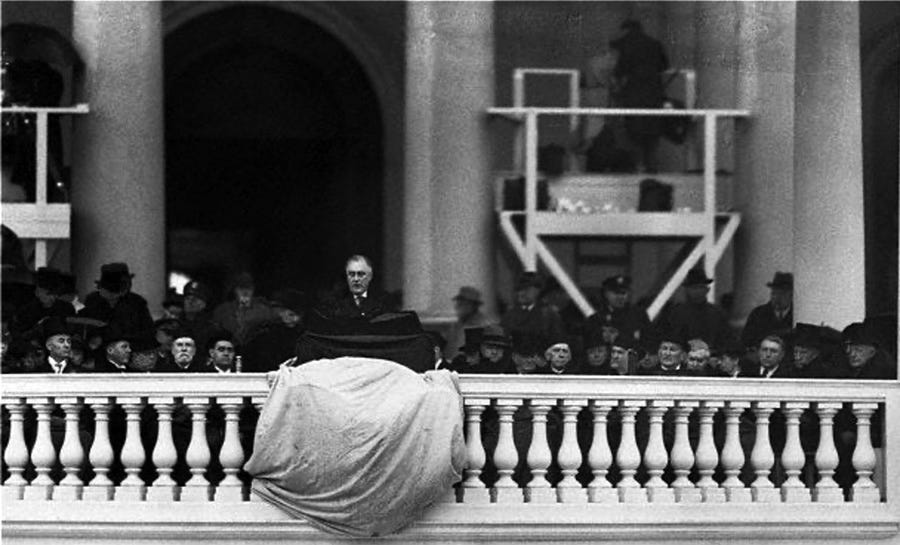
That moral test was outlined in Franklin D. Roosevelt’s second inaugural address, when he said, “the test of our progress is not whether we add more to the abundance of those who have much; it is whether we provide enough for those who have too little.”
Discussion: It is time for Republicans who have been too cowed by Trump’s threats against them and their families to realize where their true allegiance should be. If they can read the tea leaves at all, they will resume the exercise of their authority to provide checks on presidential overreach and begin good-faith negotiations with Democrats to end the government shutdown — regardless of what Trump tells them to do.