
Memory Walk
Pemi Path Snowshoe/Hike Takes Me Back

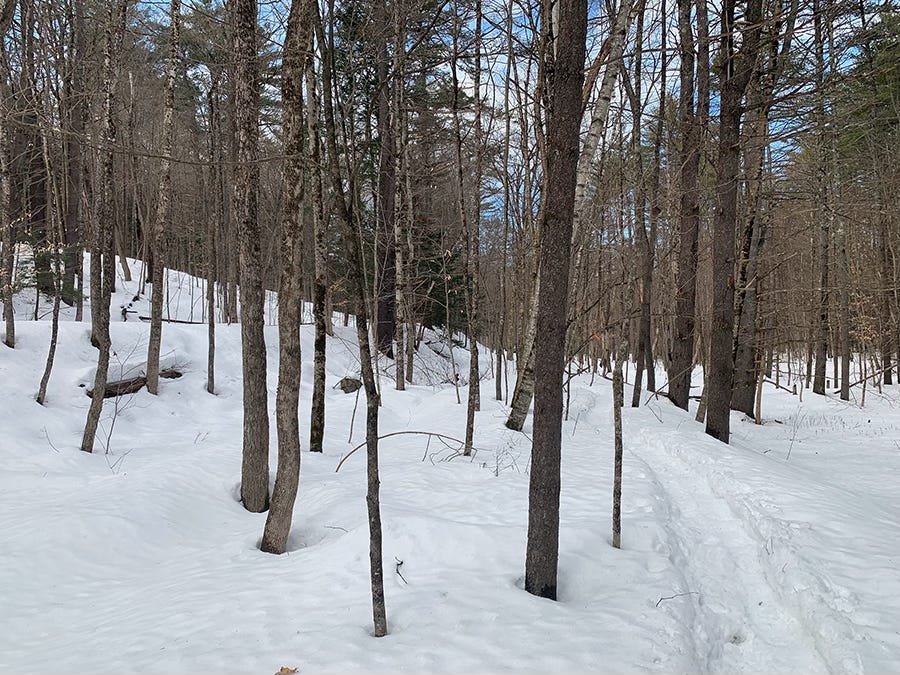
The Pasquaney Snowshoe Club and the Bristol Pemi Path Committee joined to lead a guided hike along the trail under development in cooperation with the US Army Corps of Engineers on March 8. Much of the trail runs along the railbed that once served the Bristol Branch of the Boston and Maine Railroad, connecting downtown Bristol with the Northern Line in Franklin.
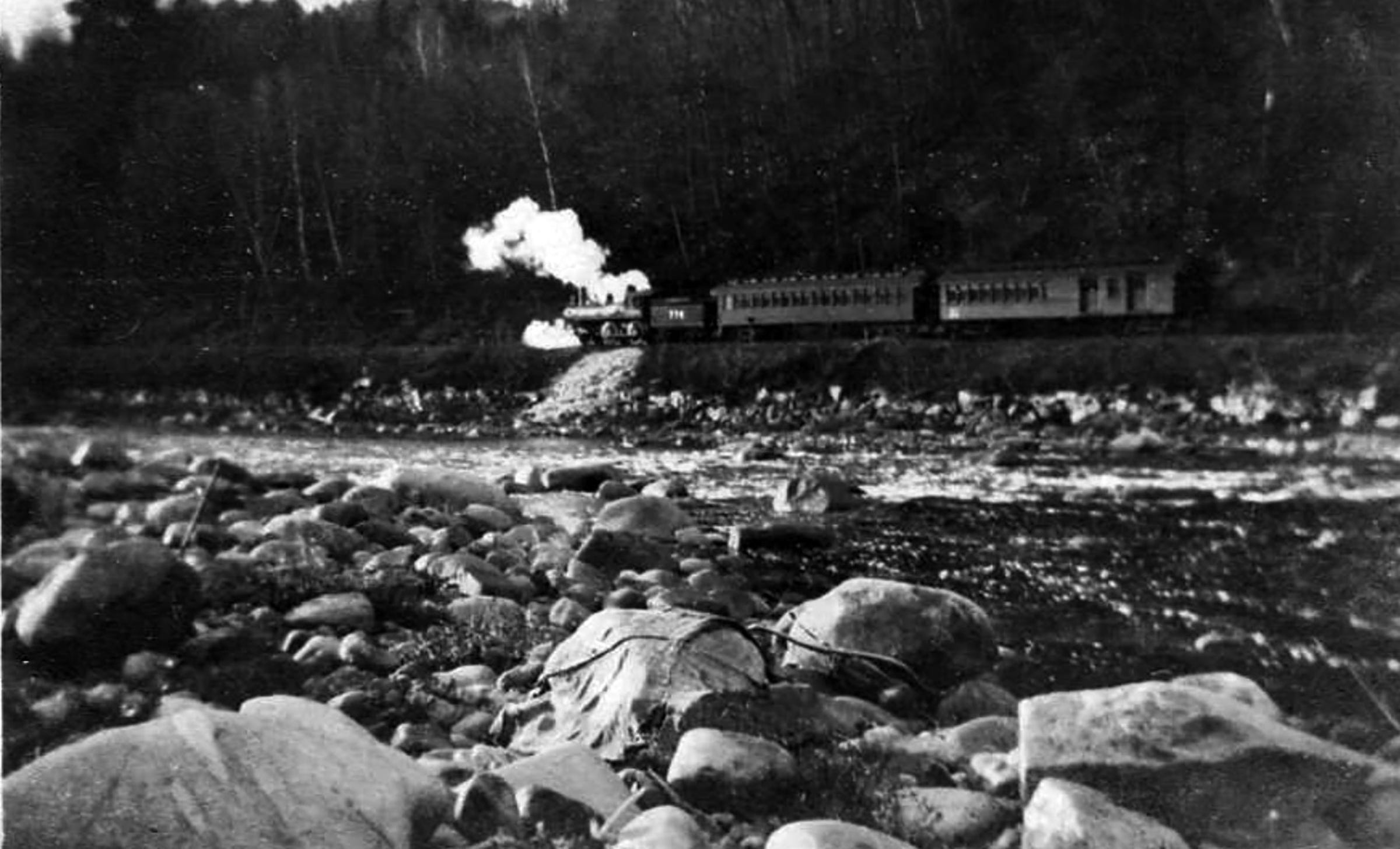
Opening in 1848, the Bristol Branch carried goods and passengers along the western side of the Pemigewasset River to the Bristol Depot at the junction of the Newfound and Pemigewasset rivers. Baseball in Kelley Park was big in the early 1900s, and baseball teams would arrive by train for the Sunday afternoon games. The turnstile for the engine is still visible, and Bristol has created Bristol Falls Park where the depot once stood, and where the Pemi Trail begins.
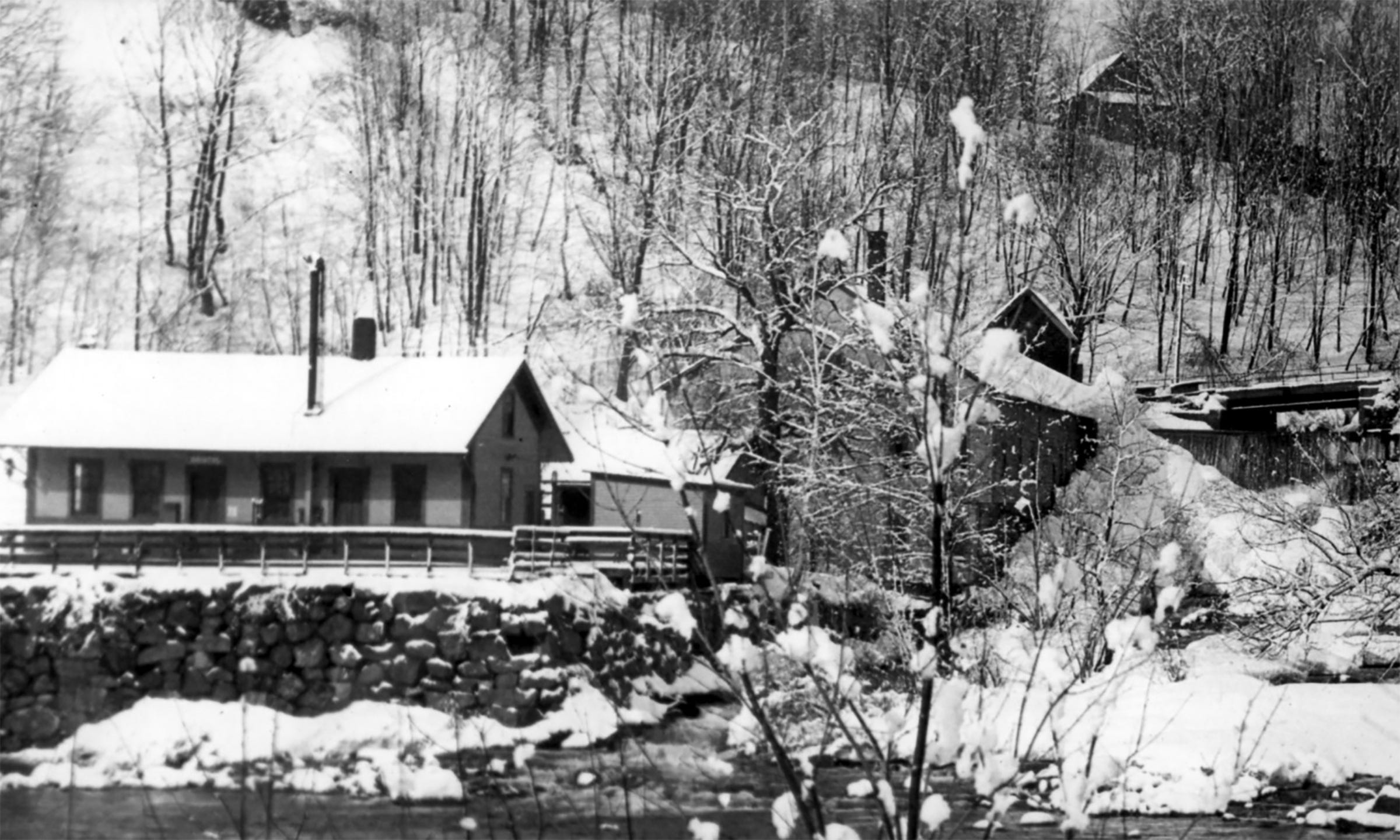
My mother, Fannie, growing up on the east side of the Pemi, in New Hampton, used to ride that train, one time taking it all the way to Boston to visit her cousin, Marjorie. It was an exciting experience for someone growing up on a farm in rural New Hampshire.
That farm was destroyed in the flood of 1936, and it also marked the end of the Bristol Branch, high waters having washed out the track. Bus service came to replace the train service, and the US government purchased low-lying property on both sides of the Pemi to serve as a containment area for the new Franklin Falls Flood Control Dam built by the US Corps of Engineers.
As part of the flood control project, the village of Hill was relocated to higher ground, being rebuilt in what was the state’s first example of a town being designed by a planning commission. Relocating the village also involved disinterment of the graves, and my father, Ralph, assisted in that effort, later saying that, while some people were squeamish about the task, he took the attitude that the dead couldn’t hurt anyone.
The flood control project also meant relocating Route 3-A, and by then my mother was living at a boarding house that lay in the way. The main portion of the building was moved back so ledge could be blasted to make way for the new highway, but it left the house high above the road with a steep drop-off in front. That house passed from the boarding house owner, Rose Dempsey, to Fred Ballou, who can legitimately be called a miser: Although he grew wealthy from stock investments, he lived in a single room filled with wood for the wood stove — wood he gathered by carrying fallen branches from Old Hill Village to his home. In old age, with the roof falling in, he sold the house to my parents with the stipulation that they repair the building. My mother wanted it for sentimental reasons, and eventually I would come to live in that restored house for several years.
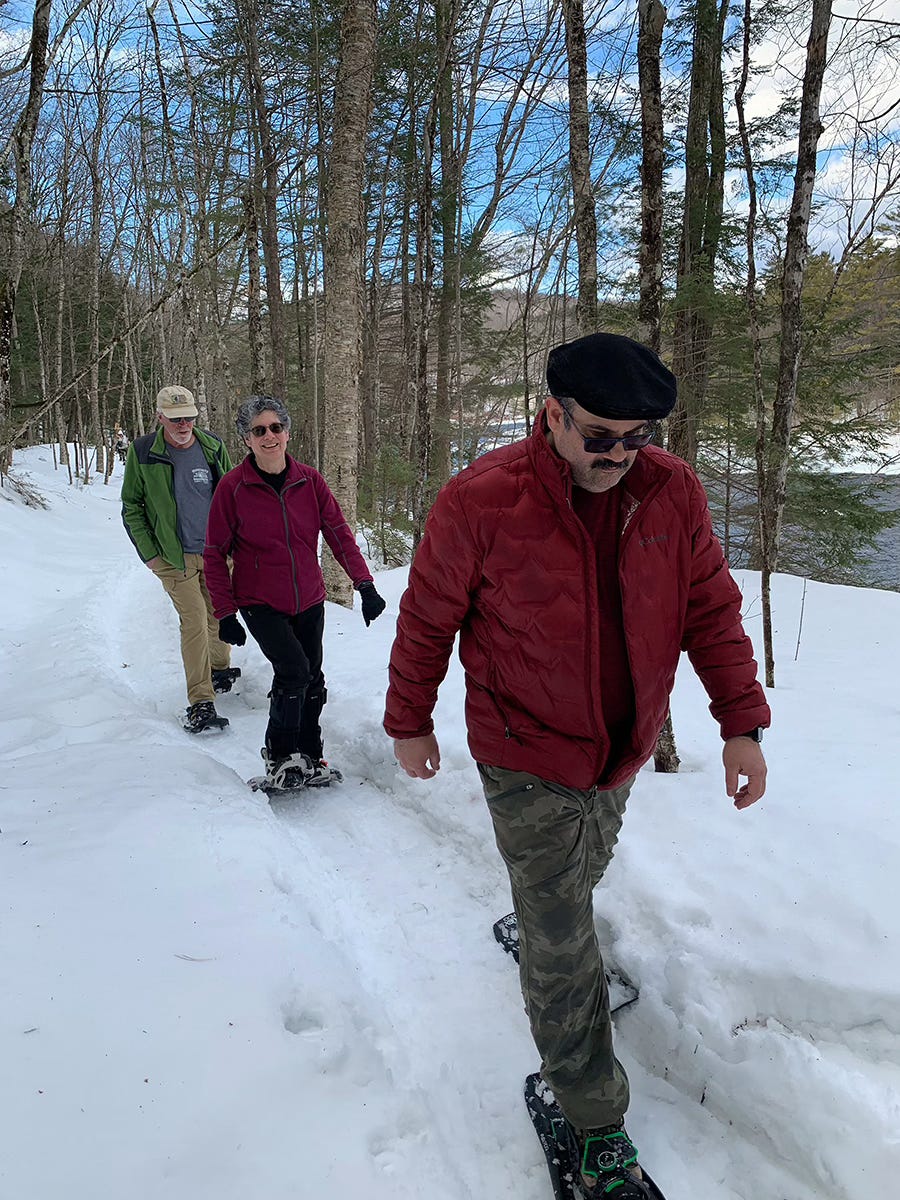
Bristol Selectman Shaun Lagueux served as a guide for the snowshoe hike, pointing out the remnants of lost civilization along the rail track: cellar holes, granite embankments, and the remains of the old Route 3-A, which converged with and crossed the trail. Shaun noted that some people who lived along the route would travel down that road to catch the train as it made its way between stations.
At the top of a hill overlooking the trail lies the former Bel Arbre Cabins, which had been popular with hunters and others looking for temporary lodging. One of the men on the snowshoe hike recalled having stayed there “a long time ago”. As it happens, I also have connections there.
When Fred Ballou got married, his wife, Daisy, was owner of the Bel Arbre Cabins. After the Ballous, the property went through a succession of owners, including my brother-in-law, Dale Benson. For a time his father, “Backcountry Ben”, managed the property, and Ben hired my sister, Kathi, to clean the cabins and do housekeeping. Later, Ben’s daughter and Dale’s sister, Lee, took ownership. Lee is now my wife.
Passing further down the trail, hikers passed a steep hillside at the top of which lies the property once known as the Indian Trail where a restaurant and gas station served people traveling along the new Route 3-A between Franklin and Bristol. As a child, my best friend, Mauritz “Skip” Sterner, grew up in the family that owned the Indian Trail. At that time, I lived on the Bristol section of the Borough Road, now renamed Smith River Road, and there were not many people my age in the area. Skip Sterner, Ralph Irving, and Manfred “Skip” Perron lived more than a mile away, but they were close enough for us to spend time together.
One day, when we were perhaps seven or eight years old, after stopping for bubble gum at the Indian Trail store, the four of us ventured down that steep bank toward the Pemigewasset River, slipping and sliding on the leaves. The trees were full and dense. At some point, we opened the wrappers to the Bazooka bubble gum and read the fortunes inside. One of them stated, “You will lose a friend.” Young and naive, we took the message literally. Looking at one another and the trees surrounding us, we were spooked, and scrambled back up that bank to the expansive field where it would be impossible for one of us to get lost.
Farther along the snowshoe trail, toward the end of the Pemi Path, we would pass below the property once owned by a retired school teacher, Harold Kenney. Harold was a close family friend during my childhood, and we used to sit on his porch at dusk and gaze at Periwig Mountain, listen to the whippoorwills whose calls once were common, and share stories. Harold used to complain that Fred Ballou would stop to visit during his trips scavenging wood for his fire, spitting tobacco juice on the porch.
Finally, the hikers reached the end of the Pemi Path, at its intersection with the access trail from Profile Falls to Periwinkle Circle, an area with a boat launch and picnic area. While some snowshoers made the return trek along the Pemi Path, others turned toward the parking area near Profile Falls where waiting cars took them back to the starting point.
Of course, growing up by the Smith River, the 40-foot Profile Falls less than a quarter-mile away became a favorite spot to visit. I used to take along a book and sit on the ledges alongside the falls during the summer, enjoying the sound of the rushing water and the peace of the area. Years later, my father would reside on Profile Falls Road and when not operating his perpetual yard sale, he would take walks to the falls.
The Pemi Path will become a new favorite place to go, providing new memories to layer upon the old.