
Flying To War
NH National Guard Taking Part In Special Military Operation In Iran

DNA Doe Project Identifies Human Remains Found In Bristol
Trump Reassigns Noem To Serve As ‘Special Envoy’
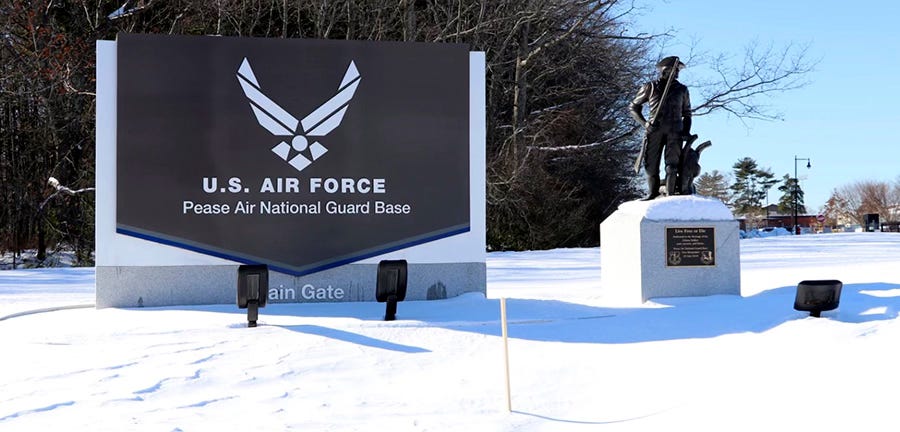
Governor Kelly Ayotte announced on March 5 that the federal government had activated the New Hampshire National Guard’s 157th Air Refueling Wing in late February, ahead of the United States-Israel’s initiation of a war with Iran.
The governor’s announcement came the same day that the US House of Representatives, in a 212-219 vote, and the US Senate, in a 45-53 vote, failed to invoke a war powers resolution that, if signed into law, would have immediately halted President Donald Trump’s ability to conduct the war without congressional approval.
That win for the president emboldened him to say, “[W]e want to finish this one first, but [Cuba] will be just a question of time.” Since establishing his “Board of Peace” to help stabilize Gaza in the wake of Israel’s devastation of the area, Trump has cast the coalition as an alternative to the United Nations, but then joined Israel in its attack on Iran.
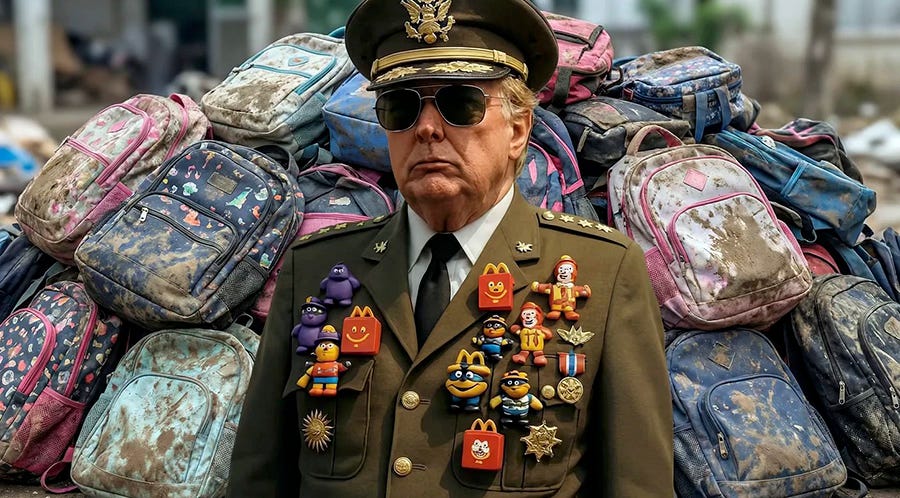
An Intercept analysis found that “every member state of the Board of Peace has been rebuked for human rights violations, including many by [Marco] Rubio’s own State Department. Those not currently on the State Department list after a 2025 whitewash of countries’ human rights reports shielding Trump’s allies from honest assessments were previously cited by the department.”
Congress’ refusal to assume control of the Iran War is not an aberration. As Thomas E. McNamara recounts in The Steady State, “Starting with Harry Truman, every president has sent armed combat forces abroad without a declaration of war. Often, with a briefing and little or no consultation until we suffer substantial combat casualties. Congress has seemed generally content with this, given its lack of formal objections or seeking judicial intervention.”
President Truman characterized the war in Korean as a “police action” and, although it was a war in every sense of the word, it is officially the Korean Conflict. “Congress never challenged it by legislative action or in the courts. Other presidents did likewise, and Congress has gradually relinquished its war power authority to the executive branch, much like someone shedding unnecessary layers in extreme heat,” McNamara writes.
Likewise, the military combat in Vietnam was never a declared war, although as it ended, Congress enacted the War Powers Act of 1973, overriding President Richard Nixon’s veto. “Ironically,” McNamara points out, “this law made it constitutional for presidents to use military force for military operations short of war for brief periods without congressional approval, provided Congress was informed in advance. Rather than restricting presidential power, the act was a delegation of authority for presidents to engage in hostilities without congressional authorization, if the action was time-limited and stopped short of full-scale war…. Presidents have accepted that grant of power, but contested the law’s constitutionality because of the limitations it imposes on the supposed exclusive control of the president as commander-in-chief.”
President Trump did informed the “group of eight” congressional leaders prior to the start of hostilities, but “he did so only after decisions were final and troops were already moving into action but before combat began,” McNamara writes. “Yet to inform is not to consult. But Congress has consistently accepted minimal information as sufficient to turn over its constitutional authority in Article I, Section. 8.”
He continues, “The 1973 law formally ceded to the executive the power to take military action short of war for limited periods, provided Congress is ‘informed’ periodically. Congress’s role, according to the War Powers Act, is to listen. It retains its power to declare war in an age when declaring war is obsolete. Use of force short of war is now a presidential power. … Harry Truman used a UN Security Council resolution as his legal justification for Korea, and Congress’s vote explicitly opposing the invasion of Cambodia did not stop Richard Nixon. Even after the Cold War, President Clinton acted unilaterally against Saddam Hussein and sent the military to Somalia, Haiti, Bosnia, and Kosovo. For the major wars, Vietnam, Afghanistan, and Iraq, Congress has voted resolutions and funding, but no declaration of war.”
Finally, “This issue is distinct from whether the actual attack on Iran was a strategic move or a throw of the dice. If the recent Venezuela, Nigeria, and Iran examples of the imperial presidency are not enough to energize Congress, then this president is likely to give them another case in the near future. We may already be in one involving the entire Mideast and there is always Cuba.”
DNA Doe Project Identifies Human Remains Found In Bristol
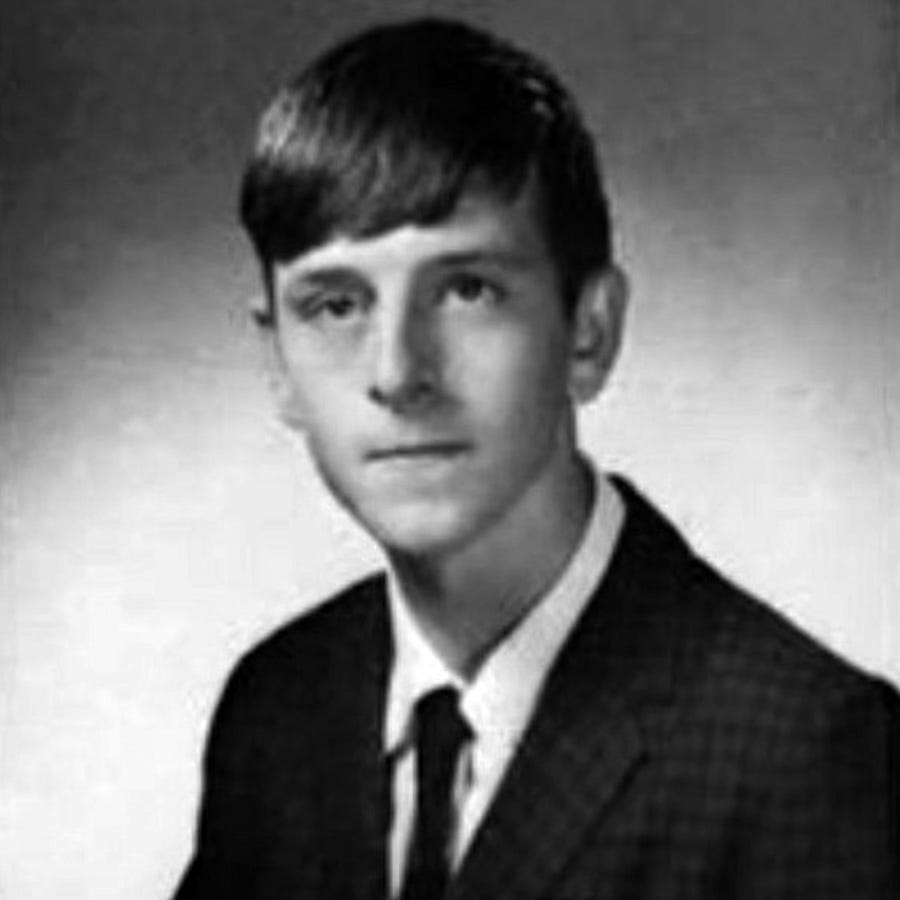
Using advanced forensic genetic genealogy techniques, the identity of a missing man whose skull was discovered in a wooded area of Bristol in 1986 has been identified as Warren Kuchinsky. His identity was confirmed through DNA testing of a surviving family member.
According to Attorney-General John M. Formella, the Office of the Chief Medical Examiner, assisted by the New Hampshire State Police and the University of New Hampshire Forensic Anthropology Identification and Recovery Lab, partnered with the DNA Doe Project last year to identify the human remains. “This identification reflects the power of partnership and scientific advancement,” Formella said. “The dedication of the Office of the Chief Medical Examiner, the investigative support of the New Hampshire State Police, and the extraordinary work of the DNA Doe Project have restored a name to an individual who had been unidentified for nearly 40 years.”
Kuchinsky was last known to be alive in the mid-1970s. The investigation found no evidence of foul play.
The DNA Doe Project is a nonprofit organization that works in partnership with law enforcement, medical examiners, and volunteer genealogists to create DNA profiles and build family trees using publicly available genetic databases and historical records.
Trump Reassigns Noem To Serve As ‘Special Envoy’
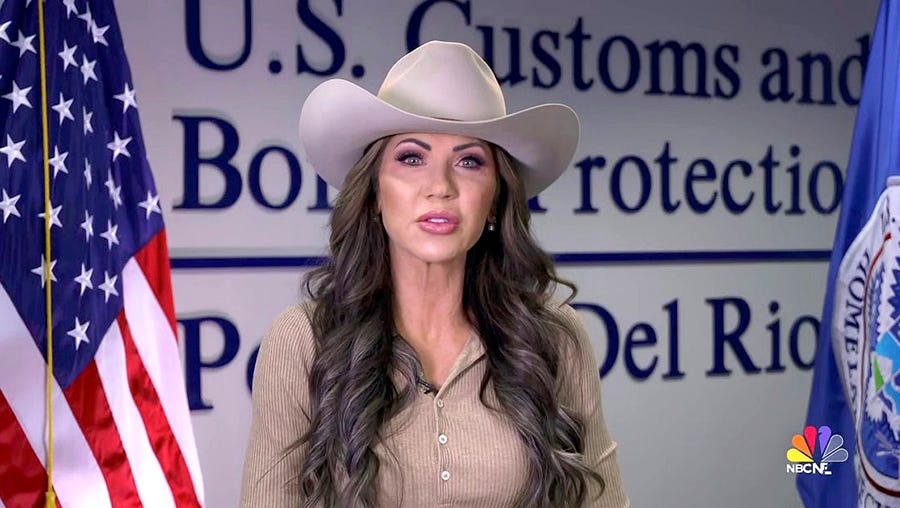
The face of government oppression, Kristi Noem, is out, but her successor is not likely to change the course of Homeland Security if Markwayne Mullin gets confirmed as its next director. The Oklahoma senator is a Trump loyalist, businessman, and member of the Cherokee Nation — a combination that might give the impression that his varied background would lead to reform in the agency. One incident dispels that hope: In 2023, Senator Bernie Sanders had to intervene when Mullin threatened Teamsters President Sean O’Brien, telling him to “stand your butt up” while he rose from his chair and took off his wedding ring as he prepared to fight. “Every now and then you need to get punched in the face,” he once said.
Noem fell out of favor with Trump during her appearance before a congressional oversight committee when she said the president had approve the $220 million ad campaign she entered into with Safe America Media, a small company without headquarters or a website and, as Colorado Representative Joe Neguse noted, “is registered, apparently, or attached to a residence from a political operative and, of course, one of the subcontractors of that contract, as you know, is a political firm that’s tied to you back when you were governor of South Dakota.” Trump said he had not authorized the ad campaign, and reassigned her to a newly created role as “Special Envoy for The Shield of the Americas,” a Western Hemisphere security initiative the administration says it will unveil in Doral, Florida, on March 7.
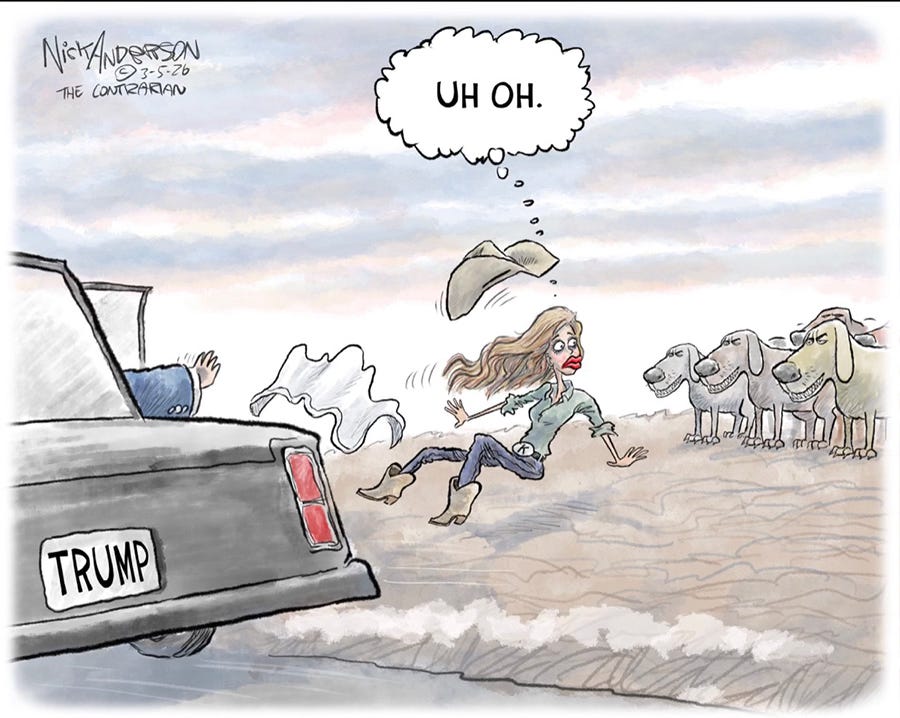
Mullin has better credentials that Noem’s qualifications as a puppy-shooter. He has served on committees in Armed Services, Environment and Public Works, Health, Education, Labor and Pensions, and Indian Affairs, giving him experience in defense, oversight, rural policy, and tribal matters, but he also supports completing the border wall and backed the One Big Beautiful Bill Act that tripled the funding for immigration enforcement while cutting back on support for the poor.