

Also on today’s menu at the News Café:
Ayotte Did Not Join Opposition to Merger of Nuclear Firms
US Supreme Court Overturns Lower Court on Mail-In Voting
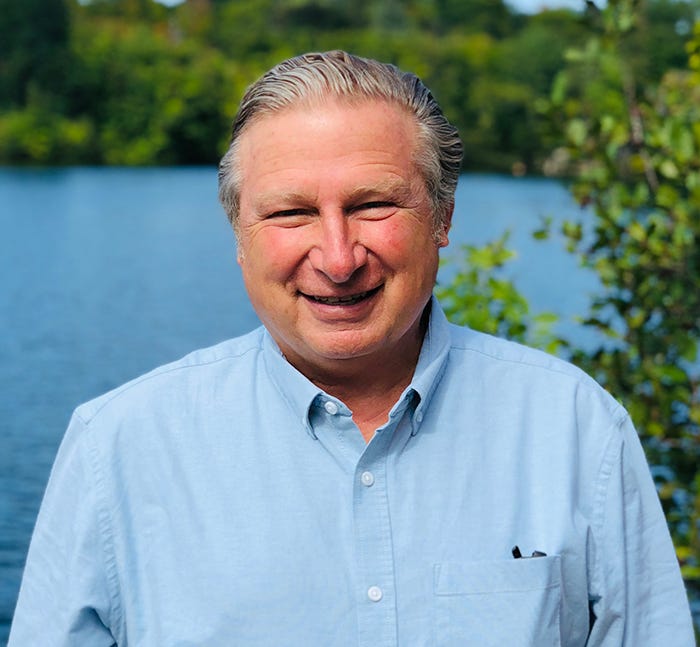
Charlie St. Clair, best known as the executive director of the Laconia Motorcycle Week Association, died August 22 from injuries he sustained due to a “tire malfunction” on his motorcycle as he was making his 50th trip to the Sturgis (SD) Motorcycle Rally on August 4.
St. Clair was a longtime advocate for historical preservation and tried unsuccessfully to prevent the demolition of the Hathaway House on Union Avenue. He served on the Lake City’s planning board and became a Democratic state representative for the city. When Laconia Mayor Andrew Hosmer moved out of state, St. Clair served as interim mayor until a new mayor could be elected.
After the accident on Interstate 90 West in Avon, Ohio, he was treated at MetroHealth Medical Center in Cleveland, but according to the Laconia Motorcycle Week Association, “Despite every effort, his injuries were too severe, and he ultimately passed away from heart failure.”
Discussion: Deputy Director Jennifer Anderson and President Cynthia Makris are left to handle the 104th Laconia Motorcycle Week, the oldest motorcycle rally in the nation, and the third largest after Sturgis and Daytona. They will be announcing services for Charlie as soon as arrangements are complete. Governor Kelly Ayotte issued a statement: “Rep. Charlie St. Clair dedicated his life to serving the people of Laconia — from serving on the Planning Board to representing the city at the State House. Charlie loved our state and was proud to welcome visitors from around the world to New Hampshire during his 35 years as head of the Laconia Motorcycle Week Association. Joe and I are praying for Charlie’s family, friends, and fellow riders as they mourn his loss.”
Ayotte Did Not Join Opposition to Merger of Nuclear Firms
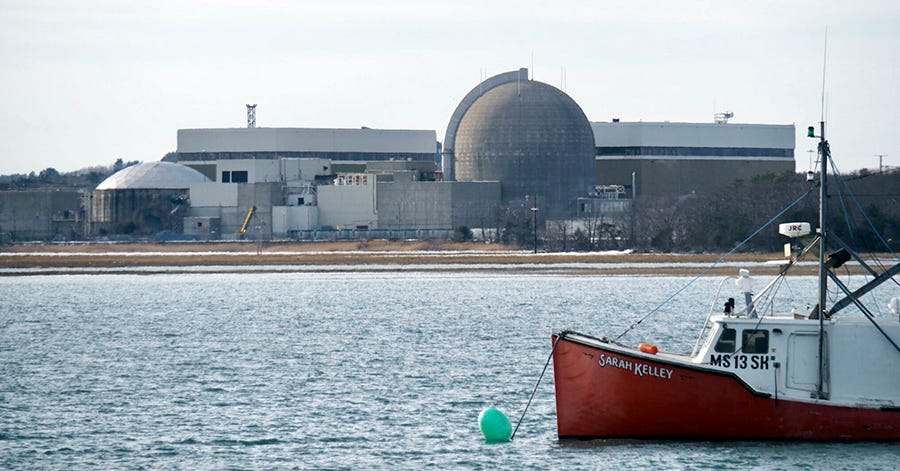
The governors of Maine, Massachusetts, Rhode Island, Vermont, and Connecticut are united in opposition to a proposed merger between NextEra Energy of Florida, which owns Seabrook Station in New Hampshire, and Dominion Energy of Virginia, owner of Millstone Power Station in Connecticut, which would create the largest regulated utility in the world. The New England governors worry that it would concentrate an “unprecedented amount of leverage” in NextEra, which they said has exhibited “anticompetitive” behavior in past dealings in the region.
New Hampshire Governor Kelly Ayotte did not sign the joint letter, and New Hampshire Consumer Advocate Don Kreis said that, although he is “extremely skeptical” about the proposed merger, “I can’t argue with the governor’s decision to think more about it, as well.”
The New England States Committee on Electricity argued, “The states’ concern that these companies will act to disrupt and delay infrastructure development is not hypothetical.” citing NextEra’s opposition to the New England Clean Energy Connect transmission corridor completed early this year that brings hydropower from Quebec through Maine and into Massachusetts.
Discussion: Consumer advocates from across New England are asking the Federal Energy Regulatory Commission to extend the comment period to give them time to obtain further information about the proposed merger. Jared Chicoine is New Hampshire’s representative on the New England States Committee on Electricity. Governor Kelly Ayotte has asked the New Hampshire Department of Energy to find a way to get more nuclear generators operating in the state.
US Supreme Court Overturns Lower Court on Mail-In Voting
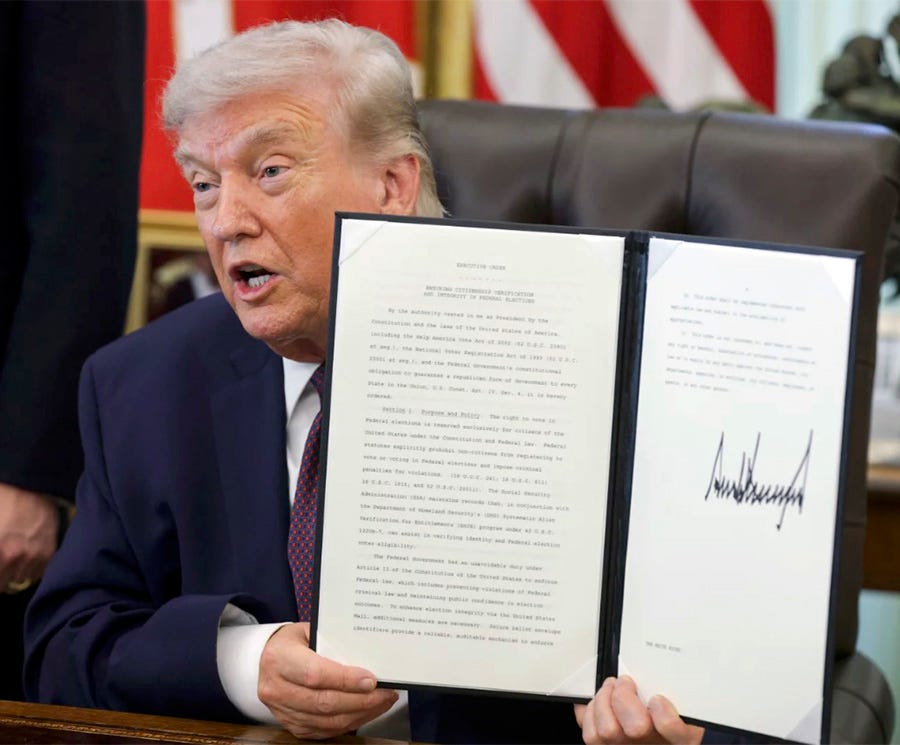
The US Supreme Court, in Trump v. California, has unlocked President Donald Trump’s executive order restricting mail-in voting for this fall’s midterm election, ruling that creating and distributing State Citizenship Lists imposes no obligations on the states, so they “suffer no concrete harm” from it, “And without concrete harm, there is no standing.”
The per curiam order continues, “Perhaps recognizing the weakness of that standing rationale, the Court of Appeals added another: §2(a) infringes the States’ sovereign authority to create election rules. But§2(a) does no such thing. Instead, it simply directs the Secretary to take certain actions if appropriate, feasible, and lawful. … This internal directive does not regulate the States’ voter registration processes. Nor does it impinge on the States’ authority ‘to create and enforce a legal code’ for elections.”
In her dissent, Justice Ketanji Brown Jackson said the ruling “needlessly injects chaos and uncertainty into the upcoming midterm elections. … To be sure, the Court has not foreclosed States from challenging this blatantly unconstitutional Order. But it declines to explain when, exactly, is the right time to bring a meritorious election-rule claim challenging unconstitutional interference with electoral processes. The majority just signals that these claimants had to wait — even though the election cycle had started and despite facing pocketbook costs, threats of prosecution, and an affront to their sovereignty — before receiving the relief to which they are likely entitled.”
Discussion: Per curiam is a court opinion issued collectively by a panel of judges without naming a single authoring judge. This ruling postpones a decision on the legality of the president trying to control elections. The fact that Trump is trying so hard to exclude voters he suspects would vote against him indicates that he fears Republicans will lose the election. A further indication is Jared Kushner’s request to meet with Democrat Hakeem Jeffries as part of a broader effort by the White House to establish lines of communication, should Democrats win the House this fall.
