
Better Detail
Digitized Maps of Schools Could Aid in Emergency Responses

Also on today’s menu at the News Café:
Hearing Set on Experiences With Concord Hospital
Trump Administration Seeks To Undermine Science
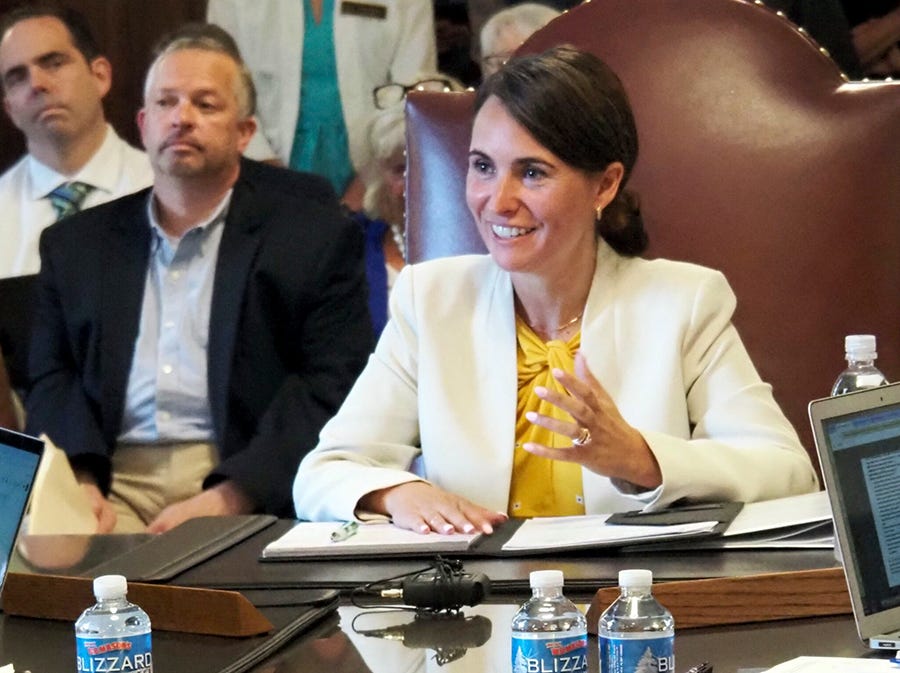
The NH Executive Council has approved a $2.6 million contract with the New Jersey-based Critical Response Group, Inc. to create digital maps of school buildings that can be shared with local first responders — police, fire, and medical technicians — to facilitate efficient responses during emergencies. Hardy Allen, the northeast regional director of CRG, said, “A typical blueprint for even the newest school built in the state of New Hampshire is not going to have all the things that public safety cares about,” such as office labels, roof access points, utility shutoff areas, and defibrillators.
Education Commissioner Caitlin Davis told executive councilors, “Right now, there is inconsistency across the state…. This item will put all of the schools in the state on the same playing field.” She said the funding for the Statewide Public School Critical Incident Mapping Project will be come from about $50 million in matching grants made available to public school districts seeking to upgrade security.
The company will verify room locations, numbering systems, and stair locations, collecting floor plans from participating schools, as well as any existing digital mapping information. Districts without up-to-date plans will have the company deploy light detection and ranging (LiDAR) scanning to get 2D layouts to enable it to make CAD maps. The company also may use drones to map the school’s campus.
Discussion: New Hampshire will own the digital map data, and the company will maintain the system for five years and update it as needed. While the contract had bipartisan approval from the Executive Council, Karen Liot Hill (D-Lebanon) expressed concerns that the mapping might reveal vulnerabilities that a school district would not be able to afford to fix. “I can see that mapping is the first step, but ultimately there’s going to presumably need to be some improvements made to infrastructure,” she said. Unmentioned, at least in the New Hampshire Bulletin article, was how to ensure that those detailed digital maps would be secured from unauthorized access. One could imagine how devastating they could be in the hands of someone attacking a school.
Hearing Set on Experiences With Concord Hospital
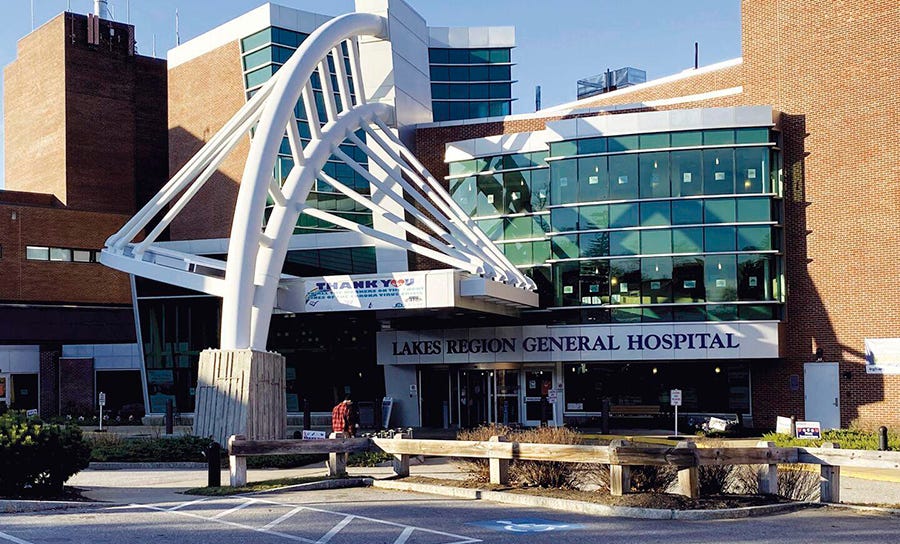
The state’s Healthcare Consumer Protection Advisory Commission has scheduled a public hearing on Wednesday, June 24, at 4:30 p.m. at Winnisquam Regional High School in Tilton to hear residents’ healthcare experiences at the Franklin and Laconia hospitals since their acquisition by Concord Hospital.
Attorney-General John Formella suggested questions such as how the acquisition of Franklin Regional Hospital and Lakes Region General Hospital has impacted cost, access, and quality of healthcare, as well as transparency. Has primary care access changed? And how could the commission address consumers’ healthcare concerns?
The Healthcare Consumer Protection Advisory Commission was established to consult with and advise the attorney-general on the administration and management of the Healthcare Consumer Protection Trust Fund to promote consumers’ healthcare needs.
Discussion: People may attend the meeting virtually here but Formella warns that joining virtually does not guarantee having a chance to comment during the meeting. Written comments and questions, which will become part of the public record, may be submitted to HCPAC@doj.nh.gov.
Trump Administration Seeks To Undermine Science
The Trump administration, in 400 pages of new regulations, has announced dramatic changes in how the government plans to distribute federal research money, including requiring that any research align with the president’s priorities. Under the plan proposed by the Office of Management and Budget, political appointees, rather than those with scientific backgrounds, would assess and decide whether to back research proposals. Peer review by experts in the field would be considered advisory only.
The new rules would severely limit international research partnerships; curtail travel to conferences presenting scientific work; and publishing research for the public would no longer be covered. Scientists will be judged on whether they are a “risk” — including affiliations with nonprofit or other organizations that the administration considers “subversive”, such as those looking into climate change and risks to human health.
The administration says the new rules will improve “transparency, accountability, and oversight for Federal awards across the Federal Government. This includes ensuring that American tax dollars are not wasted or misused.” Others, such as Dr. Nancy Krieger, a public health professor at Harvard University who helped sue the Trump administration after her federal study on health equity was canceled, described the changes as “a power grab” and said, “This will stifle American science and ingenuity. It will stifle American scholarship. It will affect Americans’ health. It will affect the well-being of communities. It is a recipe for disaster.”
Discussion: A tightening of research grants is warranted, to ensure that tax dollars are not wasted on dubious scientific studies; but placing those decisions in the hands of people with no scientific background, and especially requiring the studies to be aligned with “the president’s priorities” rather than non-political goals, undermines the integrity of the research and would likely be more of a waste of tax dollars.