
Another World
We Have Returned From A Trip To New Zealand

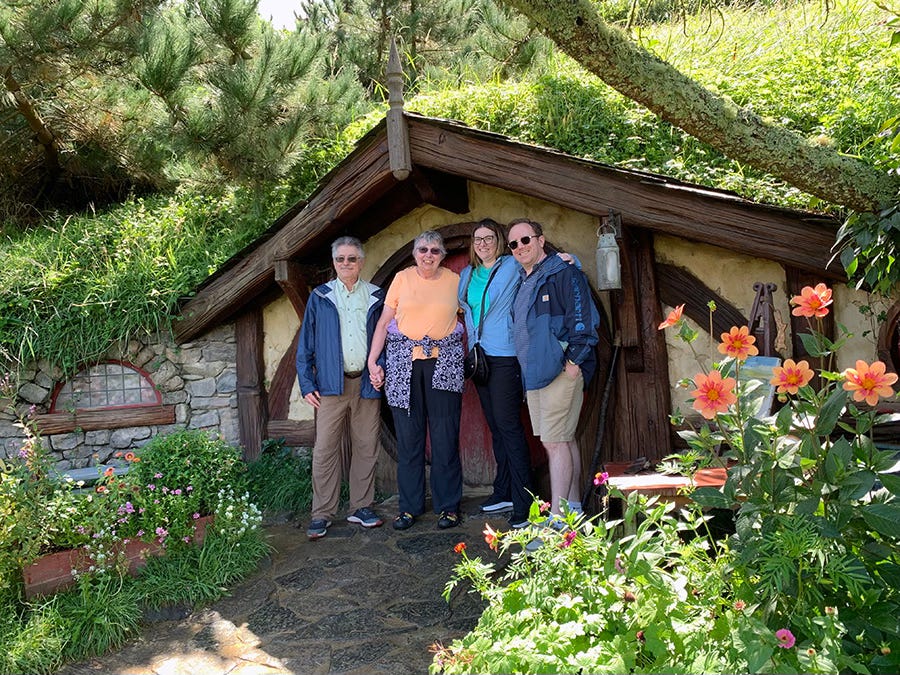
In the darkest depths of Mordor, while ICE was bringing despair, four of us made a journey to New Zealand where we expected summer temperatures and a respite from the freezing cold that was moving into the Northeast. Instead, our arrival coincided with record amounts of rainfall (a month’s worth of precipitation in 48 hours), strong winds, flooding, and mudslides (known as “slips”). While stopping at a small village to check out the stores, a helicopter hovered overhead, in a rescue operation: A motorist driving too close to a river was swept away and presumed drowned, although a passenger was able to escape from the car in time.
It was an inauspicious start to our journey. We had flown from JFK in New York to the Auckland Airport and on to a B&B at Snell’s Beach on the Matakana Coast, known for a number of sandy beaches, including Goat Island which offers snorkelling, birdlife, fish life, and wildlife, and Pakiri with its dunes, woodland, and “endless surf”. Our hopes to spend some beach time were shattered by the torrential rain and high winds that lasted throughout our stay there, only giving way to a bit of sunshine when it was time to head south to our next B&B at Lake Rotorua.
The unusual weather did lead us to take turns making lighthearted weather reports each day, and we did brave the elements for a tour of the Scandrett Historic Homestead and dined at the fabulous Bridge House Lodge Bar & Restaurant.
On the way south, we made a stop at Hobbiton, the 1,250-acre farm that served as the site of Peter Jackson’s “Lord of the Rings” and “The Hobbit” films, with 44 unique hobbit holes, including Bag End (Bilbo’s house).
The off-and-on sunshine and rain continued for most of the week, as we toured the redwoods in the Whakarewarewa Forest and Waitomo Caves, but the sun scattered the clouds during our three-kilometer hike to Taranaki Falls, and temperatures were in the 70s on our final day, spent on a whale and dolphin watch in which we saw many dolphins, the blue penguin, the world’s smallest penguin, and Type D orcas, a rare species first discovered in 1955 when some were stranded on a beach in Paraparaumu, New Zealand. The captain said they encounter those orcas on fewer than 10 percent of the whale watches, so we were lucky. Before heading to the airport for the flight home, we also spent some time at the New Zealand Maritime Museum.
We were hoping to find some unique local food, but while some meals were outstanding (The Bridge House), most were common and bland. Rosie’s Red Hot Cantina promised Mexican food, but the hot sauce was a lot like ketchup and most items featured American cheese. Even the tasty buffet served as part of our visit to Te Pā Tū — where we had hoped to sample traditional Māori cuisine — was typical of any good all-you-can-eat buffet.
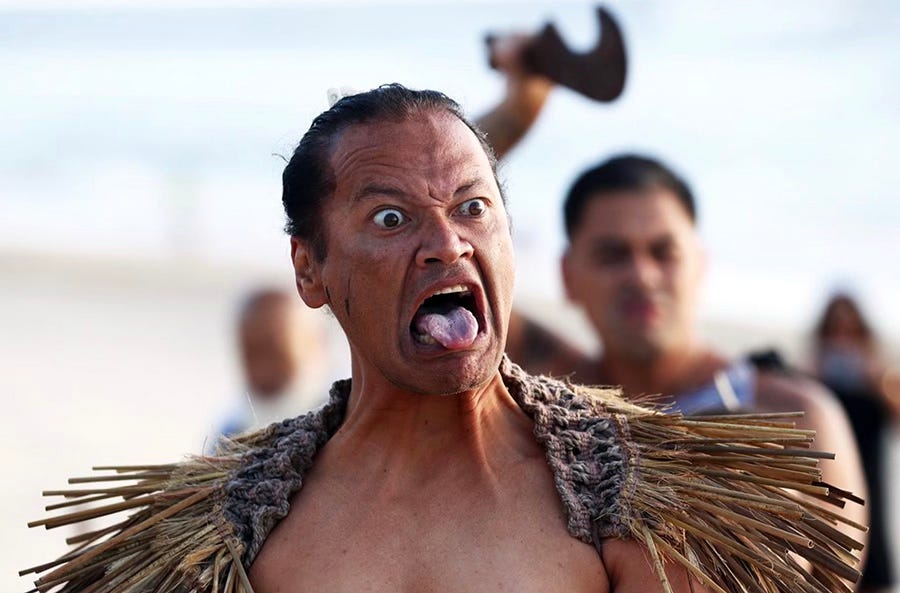
Te Pā Tū did offer a glimpse into Māori cultural history, with the bug-eyed, tongue-extended challenge to strangers and welcoming ceremony for those who showed deference to the king. The performance of symbolic dancing and displays of Māori craftsmanship barely touched the surface of the culture, but throughout our visit, we encountered the descendants of the early islanders who carried vestiges of that heritage into modern-day life.
It was something of a shock to experience temperatures in the mid-70s on our final day there and then return home to temperatures hovering around 0°. We still are recovering from the time difference. The trip out took 18 hours but put us on the other side of the International Date Line, so we left on a Saturday night and landed on Monday morning. On the 16-hour trip home, we left on Thursday at 7:30 p.m. and arrived back in New York at 5 p.m. that same Thursday.
Then there was the snow waiting for us in New Hampshire. The driveways were clear, but the path to the house and the walkway had 20 inches of snow that had to be shoveled so we could get inside.
Today, it’s a matter of settling back into a regular routine. Thanks for your indulgence during the uneven postings and this travelogue. Regular news returns tomorrow.