
Accepting Change
While Making Room For Tradition

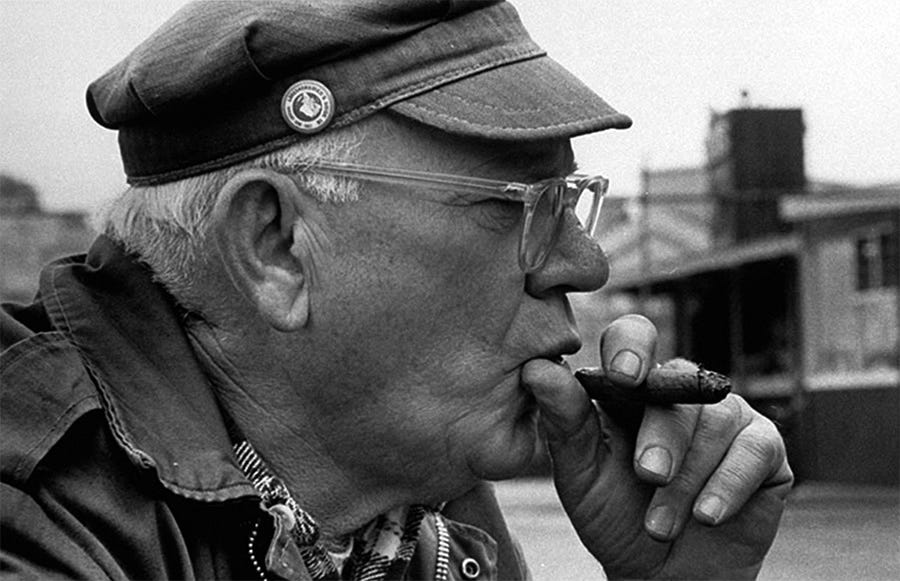
“In times of change, learners inherit the earth, while the learned find themselves beautifully equipped to deal with a world that no longer exists.”
—Author and philosopher Eric Hoffer
It is difficult to accept some of the so-called “advances” that force us to adapt long-held beliefs to new realities. We have grown comfortable with “the way it’s always been done” and may feel threatened by new methods or discoveries that show the old methods to be harmful.
The Pessimists Archive is a treasure trove of stories about the unnecessary fear of new things that have proven to be unfounded — ice manufacturing, beepers, and Sony Walkman among them.
“In 1851 physician and Florida resident Dr. John Gorrie was granted a patent for an ice making process — after years of experimenting with artificial cooling methods for medical purposes. … In 1847 Gorrie would astonish guests at an event in Florida by serving wine cooled with artificial ice in the middle of summer — when ice was often scarce. Some scoffed at the notion — with The New York Daily Globe reportedly saying that same year: ‘There is a Dr. Gorrie, a crank, down in Florida, who thinks he can make ice as good as God Almighty.’ … As the ice manufacturing industry grew, the incumbent ice [harvesting] industry would market its products as ‘natural ice’ — insisting a purer product, an unconvincing pitch to the public increasingly wary of pollution in bodies of water.”
Then, “Through the 1980s pagers became increasingly popular with teens, and also: drug dealers. This fact would eventually drag the gadget into the existing moral panic about adolescent drug use. … One school district official told The New York Times: “How can we expect students to “just say no to drugs” when we allow them to wear the most dominant symbol of the drug trade on their belts.’”
Later, “John Zerzan saw the Walkman as part of a modern trend that encouraged a ‘protective sort of withdrawal from social connections’ and Thomas Lipscomb, chief of the Center for the Digital Future, equated it with the euphoric drug ‘soma,’ from Huxley's Brave New World, creating, as he put it, ‘an airtight bubble of sound’ that was nothing but a ‘sensory depressant.’”
Today, similar arguments are being made about the iPhone, blaming it for the mental health problems of today’s youths, or TikTok for keeping people fixated on the app for long periods. To be sure, there are problems with the amount of time people spend on their devices, but it is not the fault of the iPhone; it is a matter of prioritizing in-person social interactions. With TikTok, it is not the algorithms that keep people engaged that are the problem; it is that the purpose of that engagement is to extract personal information that can be sold to marketers or hackers or the used by the Chinese government.
The late Eric Hoffer, cited above, made the case that it is not change that is the problem; it is resistance to change. As society evolves, those who cling to old beliefs and habits can come to believe that, because the changes disrupt their lives or make them feel worthless, they are tempted to join a movement demanding radical change — movements that often are fanatical and extreme. Looking to restore familiar lives, they may try to reverse the trends by supporting an authoritarian figure who will impose “traditional values” on society — even if those values to not reflect the values of the majority of citizens.
Traditional values have their place: They help to explain where we have been so we better understand where we are today. Rewriting history and tearing down memorials creates a void that cannot be filled, and leaves people without the bearings to move on. Preserving that heritage also grounds people who have come to feel displaced by progress. They don’t feel ignored or vilified if other people accept where they are coming from, even if their values no longer reflect the majority.
That is the important thing, and why free speech is so important. If people do not feel oppressed, they are not as likely to fall behind some fascist leader whose power lies in stoking fear and hatred. They can lament the changes that have taken place without feeling the need to fight progress.
After all, change is inevitable. Hatred and division are not.